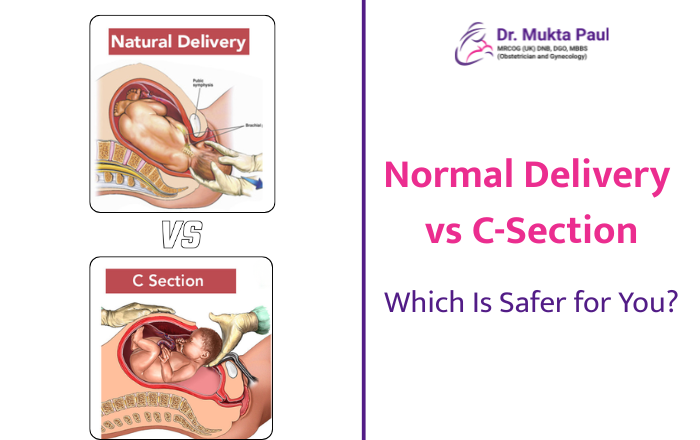
Congratulations — you’re pregnant! And somewhere between your first ultrasound and counting kicks at night, someone will ask: “Are you planning a normal delivery or a C-section?“ It’s a big question, and if it leaves you feeling confused or anxious, you’re not alone. Most expecting mothers aren’t sure how to answer it — and honestly, there’s no single right answer for everyone. This blog breaks it all down in simple, honest terms so you can walk into your doctor’s appointment feeling informed and confident.
A normal delivery, also called a vaginal birth, is when your baby is born through the birth canal without surgical intervention. Labor happens in three stages: contractions that open the cervix, pushing the baby out, and delivering the placenta.
What does labor pain actually feel like?
Most women describe contractions as intense cramps that build up gradually. The good news is that you have options — epidurals, gas and air, or breathing techniques can all help manage pain. Many mothers say that once their baby is placed on their chest, the memory of pain fades quickly. It is absolutely normal to feel nervous, but knowing what to expect makes a huge difference.
A C-section (caesarean section) is a surgical procedure where the baby is delivered through an incision in the abdomen and uterus. It takes about 45 minutes and is done under spinal or epidural anaesthesia, so you’re awake but feel no pain below the waist.
There are two types: a planned (elective) C-section, scheduled in advance for medical reasons, and an emergency C-section, performed when complications arise during labor. Choosing a C-section purely for convenience — without a medical reason — is not something most doctors recommend, because the surgical risks are real and recovery is significantly longer.
Normal delivery vs C-section isn’t just about the birth itself it affects recovery, bonding, and your baby’s long-term health.
C-sections are life-saving when needed — but they are major surgery, and they carry risks that are often underestimated.
For the baby, a C-section especially before 39 weeks — raises the risk of temporary breathing difficulties and NICU admission.
There are clear situations where a C-section is the safest option, no question:
In these cases, a C-section isn’t a choice it’s the right medical decision. The goal is always a safe delivery for both mother and baby.
| Normal Delivery | C-Section | |
|---|---|---|
| Hospital stay | 1–2 days | 4–5 days |
| Return to activity | 1–2 weeks | 6–8 weeks |
| Pain type | Perineal soreness | Incision pain |
| Breastfeeding start | Usually immediate | May be delayed |
| Future pregnancy risk | Lower | Higher with each surgery |
Yes, this is called VBAC (Vaginal Birth After C-Section), and it’s a safe option for many women. Success rates range from 60–80% when the right candidate is identified early. Not every hospital or doctor offers VBAC, so it’s important to discuss this with your gynecologist well before your due date.
For most healthy pregnancies, normal delivery is the safer option fewer surgical risks, faster recovery, and better outcomes for both mother and baby. But “safer” is not a one-size-fits-all answer. A C-section is absolutely the right and safer choice when medical conditions make vaginal birth risky.
The most important thing? This decision should never be made under pressure or without complete information.
If you’re still unsure about normal delivery vs C-section, don’t leave it to guesswork or a quick internet search. With 22+ years of experience, Dr. Mukta Paul at ProHealth Multispeciality Clinic, Kharadi has guided thousands of mothers through safe, informed deliveries. She takes time to understand your health history, answer your questions honestly, and help you plan a birth that’s right for you — not a textbook.
Book your Normal Delivery Consultation in Kharadi today and walk into your delivery room with confidence.
Copyright © 2026 All Rights Reserved Website Design By DMXDIGITAL
WhatsApp us