You’re growing a life inside you and that alone takes everything you’ve got. But what if something as silent as your blood pressure was quietly putting both you and your baby at risk, without a single obvious warning sign?
Hypertension in pregnancy is more common than most people realize. According to the World Health Organization, it affects nearly 1 in 10 pregnancies worldwide. In India, numbers are just as concerning and yet many expecting mothers don’t find out until a routine checkup reveals something unexpected.
This blog is for every mother who wants to stay informed, stay safe, and give her baby the best possible start.
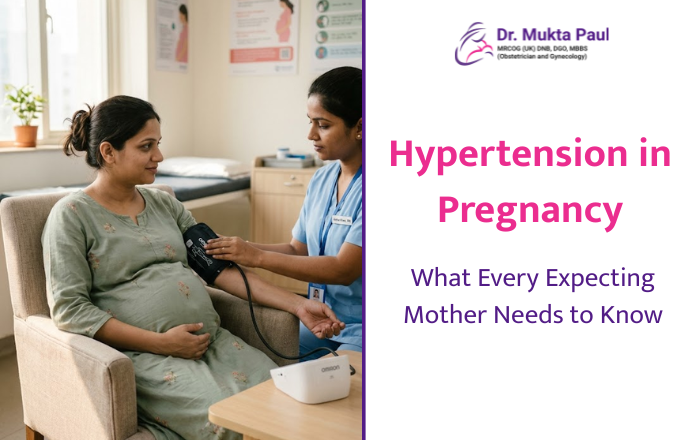
High blood pressure during pregnancy means the force of blood pushing against your artery walls is consistently too high. A reading of 140/90 mmHg or above is considered elevated during pregnancy.
There are four main types:
Understanding which type you have helps your doctor create the right care plan for you.
Here’s the difficult part pregnancy-induced hypertension often has no symptoms at all. Many mothers feel completely fine while their blood pressure climbs quietly in the background.
However, some warning signs do appear, especially as the condition progresses:
If you notice any of these signs, contact your doctor immediately. A reading of 160/110 mmHg or higher is a medical emergency — do not wait.
Pregnancy-induced hypertension doesn’t pick favorites, but certain factors do raise your chances:
If you fall into one or more of these categories, early monitoring is not optional — it’s essential.
Diagnosis starts with consistent BP readings at every prenatal visit. One high reading doesn’t confirm the condition, but repeated elevated numbers do.
Your doctor may also recommend:
These tests are not cause for panic — they are simply the tools that help your doctor keep you and your baby safe.
When high blood pressure in pregnancy goes untreated, the consequences can be serious.
The encouraging truth is that most of these outcomes are preventable with the right monitoring and timely treatment.
Managing hypertension during pregnancy involves a mix of medication, lifestyle changes, and close monitoring.
Safe medications like Labetalol, Nifedipine, and Methyldopa are commonly used and considered safe during pregnancy. Never stop or adjust your medication without your doctor’s guidance.
Lifestyle adjustments that genuinely help:
Your monitoring schedule will depend on the severity of your condition. Some mothers are seen weekly; others may need hospital observation as they approach delivery.
Q1. Can high blood pressure harm my baby?
Yes, if unmanaged. It can restrict blood and oxygen flow through the placenta, affecting the baby’s growth and development.
Q2. Will I need a C-section?
Not always. Your delivery plan depends on how well your BP is controlled, your baby’s condition, and how far along you are.
Q3. Does it go away after delivery?
Often yes, but not always immediately. BP can spike 3–6 days postpartum, so your 6-week checkup is critical.
Q4. Can it happen again in my next pregnancy?
It can. If you’ve had gestational hypertension before, pre-conception counseling is strongly recommended.
Have questions? We’re just a message away! Contact us on WhatsApp — Click Here to Chat with Us
Hypertension in pregnancy is serious — but with the right support, it is manageable.
If you’ve been diagnosed with high blood pressure during pregnancy, are experiencing any warning signs, or simply want a thorough check-up, reach out sooner rather than later.
Dr. Mukta Paul, Gynecologist with 22+ years of experience in high-risk pregnancy care in Kharadi, is available at Prohealth Multispeciality Clinic, Kharadi, Pune to guide you through every step of your pregnancy journey.
Name – Dr Mukta Paul – Gynecologist
Address: Shop No. 10, Borate Vrundavan Society, OPD No. 2, Prohealth Multispeciality Clinic, S. No. 58, opposite MOUNT N GLORY, Kharadi, Pune, Maharashtra 411014
Phone: 90961 03233
📞 Book your appointment today — because you and your baby deserve nothing less.
Copyright © 2026 All Rights Reserved Website Design By DMXDIGITAL
WhatsApp us