Pregnancy doubles your body’s demand for iron. Your blood volume increases by nearly 50%, and your growing baby draws iron directly from your reserves often leaving you depleted before you even notice symptoms.
According to the WHO, anemia affects 40% of pregnant women globally, making it one of the most common — and most preventable — pregnancy complications.
Normal hemoglobin levels during pregnancy:
Falling below these levels increases your risk of preterm birth, low birth weight, postpartum depression, and maternal fatigue that impacts fetal brain development.
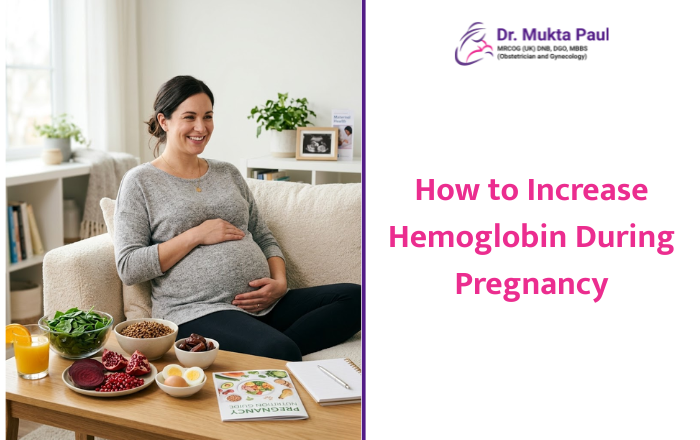
Your diet is your first line of defense. There are two types of dietary iron:
Heme iron (animal sources — better absorbed):
Non-heme iron (plant sources):
Indian diet tip: A bowl of palak dal with a squeeze of lemon is a powerful hemoglobin-boosting meal combining non-heme iron with Vitamin C — the classic combination that increases iron absorption by up to 67%.
Vitamin C converts non-heme iron into a form your gut absorbs more efficiently. This is called the “enhancer effect” in nutritional science.
Practical pairings:
Avoid taking iron with tea, coffee, or calcium-rich foods — these block absorption significantly.
The Indian government’s IFA (Iron and Folic Acid) supplementation program recommends 60mg elemental iron + 500mcg folic acid daily throughout pregnancy.
Many women skip supplements due to nausea or forgetfulness. Take them at bedtime with water to minimize stomach upset — a small but evidence-backed habit change.
Severe deficiency may require IV iron infusion, which is safe in the 2nd and 3rd trimesters and shows rapid hemoglobin correction within 2–4 weeks.
Folic acid isn’t just for neural tube prevention — it’s essential for red blood cell formation. Without adequate folate, even good iron intake can fail to raise hemoglobin effectively.
Best folate food sources:
B12 deficiency is extremely common in Indian vegetarian pregnancies. It causes megaloblastic anemia a different but equally serious form of low hemoglobin.
Sources: milk, paneer, curd, eggs. If you’re fully plant-based, a B12 supplement is non-negotiable during pregnancy.
Some underlying issues silently deplete hemoglobin:
Your OB-GYN should screen for these during early ANC (antenatal care) visits.
Don’t wait for symptoms. Fatigue, breathlessness, and pale skin appear only after hemoglobin has already dropped significantly.
Testing schedule:
Early detection allows dietary corrections before medical intervention is needed.
| Block Iron | Why |
|---|---|
| Tea & coffee | Tannins bind iron |
| Calcium supplements | Compete for absorption |
| Excess fiber bran | Phytates reduce uptake |
| Antacids | Neutralize stomach acid needed for iron |
Q: What is a dangerously low hemoglobin level in pregnancy?
Below 7 g/dL is considered severe anemia and requires urgent medical attention, often IV iron or blood transfusion.
Q: How fast can hemoglobin increase during pregnancy?
With consistent supplementation and diet changes, hemoglobin typically rises 1–2 g/dL over 3–4 weeks.
Q: Is pomegranate juice good for hemoglobin?
Yes. Pomegranate contains iron, Vitamin C, and B vitamins — making it one of the best natural hemoglobin-supportive fruits during pregnancy.
Q: Can low hemoglobin affect my baby’s brain development?
Yes. Maternal iron deficiency anemia in the 3rd trimester is linked to impaired fetal cognitive and motor development.
Have questions? We’re just a message away! Contact us on WhatsApp — Click Here to Chat with Us
Managing hemoglobin during pregnancy isn’t just about eating spinach it requires personalized testing, trimester-specific corrections, and the kind of clinical judgment that only comes with experience.
Dr. Mukta Paul is a highly experienced Obstetrician and Gynecologist with 22+ years of expertise in high-risk and routine pregnancy care. Practicing at ProHealth Multispeciality Clinic, Kharadi, she offers:
If you’re pregnant and concerned about anemia, fatigue, or low hemoglobin, Dr. Mukta Paul is the specialist you can trust.
Address: Shop No. 10, Borate Vrundavan Society, OPD No. 2, Prohealth Multispeciality Clinic, S. No. 58, opposite MOUNT N GLORY, Kharadi, Pune, Maharashtra 411014
Phone: 90961 03233
Copyright © 2026 All Rights Reserved Website Design By DMXDIGITAL
WhatsApp us