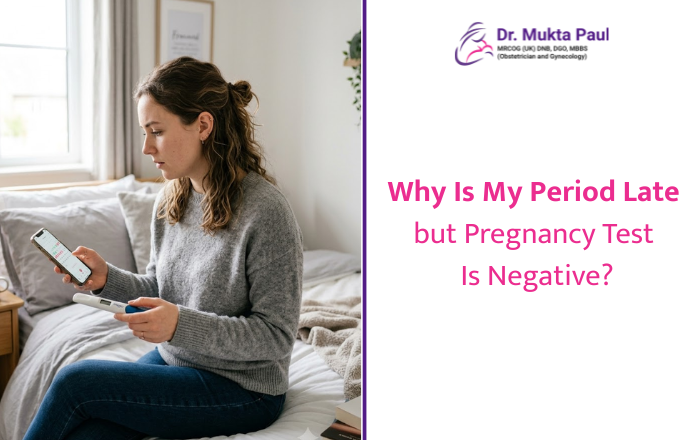
You’ve taken the test twice. Maybe three times. Still, that single line stares back at you while your period is nowhere in sight. It’s confusing, and honestly, a little unsettling. If you’ve been searching for answers about a late period negative pregnancy test, you’re not alone this is one of the most common concerns gynecologists hear from women of all ages.
The good news? A missed or delayed period with negative pregnancy test results is rarely a medical emergency. More often than not, it comes down to stress, hormonal shifts, lifestyle changes, or something as simple as testing too early. But there are also cases where it signals an underlying condition that needs attention. This article walks you through exactly why this happens, what to watch for, and when it’s time to see a doctor.
A late period with a negative pregnancy test simply means your body hasn’t ovulated and released an egg on its usual schedule or the pregnancy hormone hCG hasn’t yet built up enough to be detected. Your menstrual cycle relies on a delicate hormonal conversation between your brain, ovaries, and uterus. When any part of that conversation gets disrupted, ovulation can shift, and so can your period.
It’s worth remembering that a “normal” cycle isn’t always 28 days on the dot. Cycles ranging from 21 to 35 days are considered typical, and occasional variation of a few days is completely normal.
This is, by far, the most frequent reason for a false negative pregnancy test. Home tests detect hCG, a hormone that rises gradually after implantation. Testing before your body has produced enough of it can give a negative result even if you are pregnant.
Emotional or physical stress can interfere with the hypothalamus, the part of the brain that regulates the hormones controlling ovulation. Job pressure, travel, exams, or even worrying about being pregnant can delay your cycle.
Losing or gaining weight quickly affects estrogen production. Very low body fat, seen in some athletes or with restrictive dieting, can even stop ovulation altogether.
PCOS is one of the leading hormonal causes of irregular or missed periods. It affects how the ovaries release eggs and often comes with other symptoms like acne, excess facial hair, or weight gain.
Both an underactive and overactive thyroid can throw off your menstrual cycle. The thyroid gland plays a direct role in regulating the hormones that control ovulation.
Intense training, especially in endurance sports, can suppress the hormones needed for ovulation a condition sometimes called hypothalamic amenorrhea.
For women in their late 30s or 40s, irregular cycles can be an early sign of perimenopause, the transitional phase before menopause.
Hormonal birth control, emergency contraception, antidepressants, and some blood pressure medications can all delay a period.
Prolactin, the hormone responsible for milk production, naturally suppresses ovulation, which is why periods often stay irregular during breastfeeding.
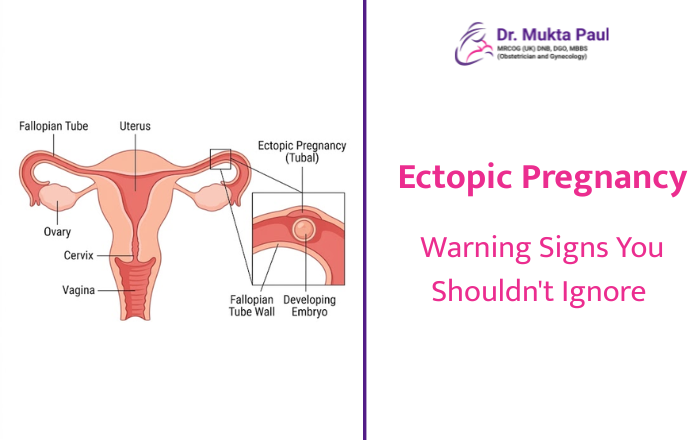
Rarely, a negative pregnancy test result can still occur in early pregnancy due to diluted urine, testing errors, or an ectopic pregnancy that produces lower hCG levels than usual.
| Possible Cause | Common Accompanying Symptoms |
|---|---|
| Stress-related delay | Trouble sleeping, fatigue, mood changes |
| PCOS | Acne, excess hair growth, weight gain |
| Thyroid imbalance | Fatigue, hair thinning, temperature sensitivity |
| Perimenopause | Hot flashes, mood swings, irregular flow |
| Over-exercising | Low energy, missed cycles for months |
If your first test was negative but your period still hasn’t arrived, doctors generally recommend retesting 3–5 days later, ideally using your first urine of the morning, when hCG concentration is highest. If the second test is also negative and your period still doesn’t come within a week or two, it’s a good time to consult a gynecologist.
When you see a doctor for a delayed period with negative pregnancy test, they’ll typically start with a detailed history of your cycle, lifestyle, and symptoms. Depending on what they find, they may recommend:
Treatment depends entirely on the underlying cause, and no single approach works for everyone. A qualified gynecologist will tailor the plan based on your test results and symptoms.
It’s important to know that no treatment can guarantee an immediate return to a “normal” cycle the body needs time to respond, and follow-up monitoring is usually part of the process.
A nutrient-dense diet supports steady hormone production. Include iron-rich foods, healthy fats like nuts and seeds, and plenty of fiber. Highly restrictive or crash diets can worsen cycle irregularity, so gradual, sustainable changes work better than quick fixes.
Left unaddressed, chronic hormonal imbalances like PCOS or thyroid dysfunction can affect fertility, bone health, and long-term metabolic health. This is why persistent irregularity deserves medical attention rather than being brushed aside.
1. Can I be pregnant even if my test is negative?
Yes, especially if you tested too early. hCG levels take time to rise, and testing before a missed period or using diluted urine can lead to a false negative. Retesting in a few days with morning urine gives a more reliable result.
2. How late can a period be before it’s considered a concern?
A delay of 7–10 days beyond your usual cycle length is generally fine. Beyond two weeks with a negative test, or missing periods for three consecutive months, warrants a medical evaluation.
3. Can stress alone delay a period for weeks?
Yes. High stress can suppress the hormones responsible for ovulation, sometimes delaying a period by one to several weeks. Once stress levels settle, most cycles return to normal on their own.
4. Does PCOS always cause missed periods?
Not always, but irregular or missed periods are one of the most common signs of PCOS. Other symptoms like acne, weight changes, and excess hair growth often occur alongside it.
5. Should I take another pregnancy test if the first one is negative?
Yes, if your period still hasn’t started after a few days, retesting with your first morning urine improves accuracy, since hCG levels are more concentrated at that time.
Have questions? We’re just a message away! Contact us on WhatsApp — Click Here to Chat with Us
If your period remains missing despite repeated negative tests, or if irregular cycles have become a recurring pattern, it’s worth getting a proper evaluation rather than guessing at the cause. Hormonal imbalances like PCOS or thyroid dysfunction are very manageable when caught early, but they do need a doctor’s assessment — blood work and an ultrasound often tell a much clearer story than symptoms alone.
If you’re experiencing a late period, irregular menstrual cycles, hormonal imbalances, or other gynecological concerns, professional medical guidance can help identify the underlying cause and provide the right treatment.
Dr. Mukta Paul
– Obstetrician & Gynecologist | 22+ Years of Experience
📍 ProHealth Multispeciality Clinic, Kharadi, Pune
Dr. Mukta Paul offers personalized care and evidence-based treatment for women’s health concerns, helping patients achieve better reproductive and hormonal well-being.
Copyright © 2026 All Rights Reserved Website Design By DMXDIGITAL
WhatsApp us