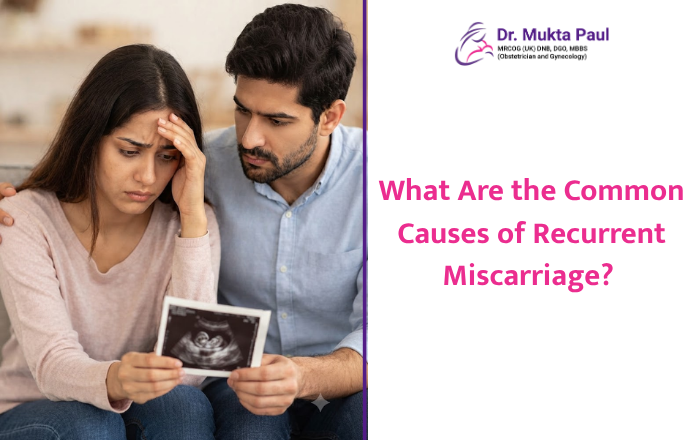
Losing a pregnancy is painful. Losing more than one can leave you confused, scared and, quite often, blaming yourself. If you are reading this after two or three losses, please hold on to one thing first: in most cases, it is not something you did.
Recurrent miscarriage is a medical condition that can be investigated, and in many women a cause can be found and managed. Even when every test comes back normal, the chances of a healthy pregnancy in the future are often better than most couples expect.
In this guide, we explain the common causes of recurrent miscarriage, the tests doctors usually suggest, and what you can realistically expect next.
Doctors use the term recurrent pregnancy loss when a woman has two or more pregnancy losses before about 20 weeks. Some guidelines define it as three losses in a row, while others suggest starting an evaluation after two. In practice, many gynecologists begin investigations after two losses, especially if the woman is above 35.
It affects roughly 1 to 2 out of every 100 couples trying for a baby. A single miscarriage is far more common, happening in about 10 to 15 out of every 100 known pregnancies, and it usually does not repeat because it is mostly caused by a chance chromosomal error in that particular pregnancy.
The most common causes of repeated miscarriage are chromosomal problems in the embryo or parents, antiphospholipid syndrome, structural problems in the uterus, hormonal conditions like thyroid disease or uncontrolled diabetes, and increasing maternal age. In nearly half of couples, no clear cause is found even after complete testing.
Most early miscarriages happen because the embryo has an abnormal number of chromosomes. This becomes more frequent as egg quality changes with age. In a small number of couples, around 2 to 5 in 100, one partner carries a balanced translocation. The parent is completely healthy, but the rearranged chromosomes can lead to embryos that cannot develop normally. A simple blood test called karyotyping checks for this.
Antiphospholipid syndrome is an autoimmune condition in which the body makes antibodies that make blood more likely to clot, including in the tiny vessels of the placenta. It is one of the most important treatable causes and is found in roughly 15 out of 100 women with recurrent miscarriage. Diagnosis needs two positive blood tests at least 12 weeks apart. When confirmed, treatment usually involves low dose aspirin along with heparin injections during pregnancy, under close medical supervision.
The shape and lining of the womb play a big role in whether a pregnancy can grow. Common uterine causes include:
Many of these can be corrected with a minimally invasive procedure. Hysteroscopic surgery to remove a septum, polyp or scar tissue is often done as a day care procedure.
Both an underactive thyroid and raised thyroid antibodies are linked with pregnancy loss. A TSH test is simple, and thyroid tablets, when needed, are effective and safe during pregnancy.
High blood sugar around the time of conception increases the risk of miscarriage. Getting sugar levels under control before pregnancy makes a real difference, and diabetes management in pregnancy continues that care once you conceive.
Women with PCOS may have a somewhat higher risk, often related to insulin resistance and weight. Being significantly overweight or underweight can also add to the risk.
A woman’s age is the strongest single factor. The risk rises noticeably after 35 and more sharply after 40, mainly because of chromosomal errors in eggs. Older paternal age and sperm DNA damage may also play a smaller role, which is why the male partner should be evaluated too.
These rarely act alone, but they can add to other risks and are worth correcting.
Many women hear advice from relatives and neighbours that leaves them feeling guilty. Normal housework, climbing stairs, travelling, sex during pregnancy, or eating ripe papaya as part of a regular diet are not proven causes of recurrent miscarriage. A single argument or a stressful day at work does not cause a pregnancy loss either.
Knowing this matters. Guilt only adds weight to an already difficult time, and it often stops couples from looking for the real, treatable reasons.
Testing is usually planned step by step, based on your history. The common tests after recurrent miscarriage include:
Not every couple needs every test. Since several investigations overlap with fertility testing, you may also find our guide on tests done during an infertility evaluation useful. If conceiving again is also taking time, infertility diagnosis and treatment can be planned alongside.
Yes, and this is the part many couples most need to hear. Even after three losses, a large number of women go on to have a successful pregnancy, including those in whom no cause is found. When a treatable cause such as APS, a uterine septum or thyroid disease is identified, managing it can clearly improve the outcome.
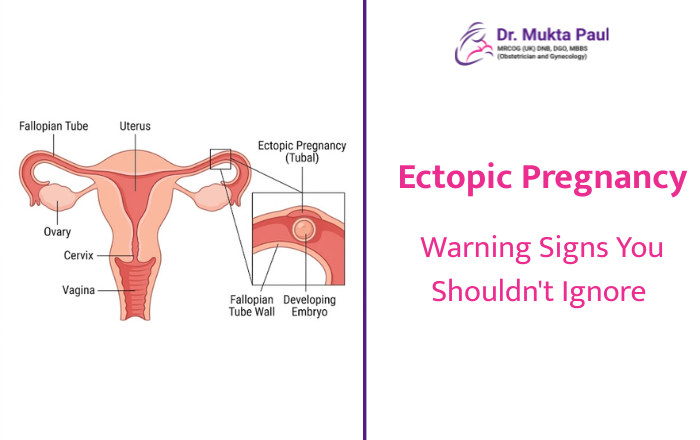
Early pregnancy care helps too. Women with a history of loss are usually seen early, with a timely scan to confirm the pregnancy is inside the uterus (which also rules out an ectopic pregnancy) and regular follow up after that. This kind of high risk pregnancy care offers both medical monitoring and reassurance.
Emotional support counts as much as medical care. Talking openly with your partner, family or a counsellor is a healthy part of healing, not a sign of weakness.
1. How many miscarriages are considered recurrent?
Two or more pregnancy losses are generally considered recurrent pregnancy loss. Some guidelines use three consecutive losses, but evaluation is often started after two, particularly for women over 35.
2. What is the most common cause of recurrent miscarriage?
Chromosomal problems in the embryo are the most frequent reason for early pregnancy loss. Among treatable causes, antiphospholipid syndrome and uterine abnormalities such as a septum are the most important. In many couples, no single cause is found.
3. Can thyroid problems cause repeated miscarriages?
Yes. An underactive thyroid and raised thyroid antibodies are both linked with a higher risk of miscarriage. A TSH blood test is simple, and thyroid medicine, if needed, is safe to take during pregnancy.
4. Does stress or lifting weight cause miscarriage?
Everyday stress, normal housework and routine lifting are not proven causes of miscarriage. Most losses are linked to chromosomal, hormonal, immune or uterine factors that are outside your control.
5. Should I get tested before trying again after recurrent miscarriage?
Yes, it is usually better to complete the recommended tests first. That way, any treatable cause can be managed before the next pregnancy, and your doctor can plan early monitoring from the very first weeks.
Have questions? We’re just a message away! Contact us on WhatsApp: Click Here to Chat with Us
If you have had two or more pregnancy losses, a calm and thorough evaluation with an experienced gynecologist can bring clarity and a clear plan for the future.
Dr. Mukta Paul, Senior Obstetrician and Gynecologist with 22+ years of experience, offers consultation for recurrent pregnancy loss at Hridan Specialist Clinic, Kharadi, Pune. She holds MBBS, DGO, DNB and MRCOG (UK) qualifications.
She can review your previous pregnancies, suggest only the tests that are relevant to you, and support you through your next pregnancy with careful monitoring from the early weeks.
Clinic: Cabin No. 2, Hridan Specialist Clinic
Address: Shop No. 1, Vitthal Heights, Mundhwa Kharadi Road, Opposite Radisson Blu Hotel, Kharadi, Pune
Call: +91 9923 329461 | +91 9639 630969 | +91 7719 085329
You can also book an appointment online.
Copyright © 2026 All Rights Reserved Website Design By DMXDIGITAL
WhatsApp us