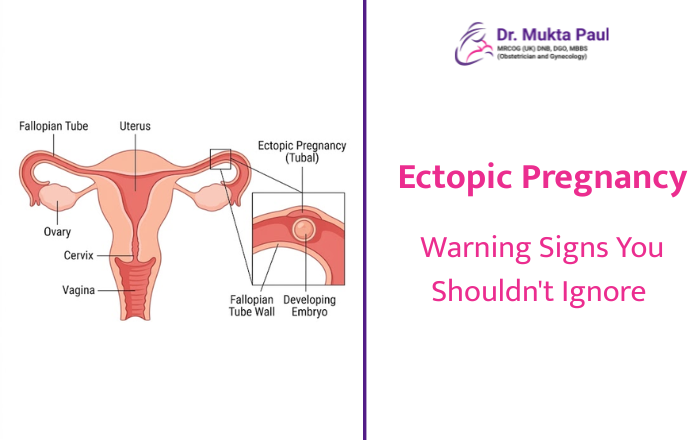
An ectopic pregnancy occurs when a fertilized egg implants outside the main cavity of the uterus, most commonly in a fallopian tube. Because the pregnancy cannot develop normally in this location, early diagnosis and medical care are important.
Knowing the warning signs of an ectopic pregnancy can help you seek medical attention at the right time. Some women may initially have symptoms similar to a normal early pregnancy, while others may develop abdominal pain or vaginal bleeding.
An ectopic pregnancy is a pregnancy that develops outside the uterus. More than 90% of ectopic pregnancies occur in the fallopian tubes, although implantation can rarely occur in other locations.
A pregnancy outside the uterus cannot continue normally. If an ectopic pregnancy grows and causes the fallopian tube to rupture, it can lead to significant internal bleeding and become a medical emergency.
For this reason, unexplained pain or bleeding during early pregnancy should not be ignored.
The symptoms of ectopic pregnancy can vary from person to person. Some women may have mild symptoms initially, while others may develop sudden and severe symptoms.
Common warning signs include:
These symptoms do not automatically mean that an ectopic pregnancy is present. However, they require appropriate medical assessment, particularly if pregnancy has been confirmed or is suspected.
Severe abdominal or pelvic pain accompanied by vaginal bleeding, dizziness, fainting, marked weakness or shoulder tip pain can indicate a possible rupture.
If you are pregnant or may be pregnant and develop severe abdominal pain, heavy bleeding, fainting or significant dizziness, seek emergency medical care immediately.
Do not wait for the symptoms to settle on their own.
An ectopic pregnancy can happen when the fertilized egg has difficulty moving through the fallopian tube to reach the uterus.
In many cases, there is no single identifiable cause. However, certain factors can increase the likelihood of an ectopic pregnancy.
These may include:
Having one or more risk factors does not mean that an ectopic pregnancy will definitely occur. It simply means that medical evaluation may be particularly important when early pregnancy symptoms develop.
An ectopic pregnancy cannot be diagnosed reliably based on symptoms alone. A doctor may use your symptoms, medical history, pregnancy test results, blood tests and ultrasound findings to determine what is happening.
A pregnancy test can confirm that pregnancy hormone is present, but it cannot by itself determine where the pregnancy is located.
A doctor may recommend blood tests to measure the level of human chorionic gonadotropin, commonly called hCG. Depending on the situation, repeated measurements may be needed to understand how the pregnancy is progressing.
A transvaginal ultrasound is commonly used during early pregnancy to check whether a pregnancy is developing inside the uterus and to look for other findings that may suggest an ectopic pregnancy.
Sometimes an ectopic pregnancy cannot be confirmed during the first assessment. In such situations, the doctor may recommend repeat blood tests or another ultrasound based on the individual circumstances.
Anyone who becomes pregnant can potentially have an ectopic pregnancy. However, the risk may be higher in people with certain medical or reproductive histories.
A previous ectopic pregnancy is one of the important risk factors. Conditions or procedures that affect the fallopian tubes may also increase the risk.
If you have previously experienced an ectopic pregnancy or have other known risk factors, tell your doctor as early as possible after becoming pregnant.
Treatment depends on several factors, including the location and size of the ectopic pregnancy, pregnancy hormone levels, symptoms, whether the fallopian tube has ruptured and your overall health.
Common approaches include:
In selected cases, medication may be used to stop the ectopic pregnancy from continuing to grow. This option is suitable only for certain patients and requires appropriate medical assessment and follow-up.
Surgery may be necessary when the ectopic pregnancy has ruptured, there is significant internal bleeding, medication is unsuitable or other clinical factors make surgery the safer option.
In some early cases, the pregnancy may stop developing naturally and the doctor may recommend close monitoring with blood tests and other assessments.
The appropriate approach varies from person to person. Your gynecologist will consider your symptoms, test results, medical history and overall condition before recommending treatment.
There is no guaranteed way to prevent every ectopic pregnancy. However, reducing the risk of pelvic infections, avoiding smoking and seeking appropriate medical care for reproductive health concerns may help reduce some risk factors.
If you have a history of ectopic pregnancy, discuss future pregnancy planning with your gynecologist. Early evaluation during a subsequent pregnancy may be recommended to confirm where the pregnancy is developing.
Contact a qualified gynecologist if you have a positive pregnancy test along with unusual abdominal or pelvic pain, vaginal bleeding or other concerning symptoms.
Seek emergency medical care if you experience:
Early assessment can help determine whether the symptoms are related to an ectopic pregnancy or another condition.
1. Can an ectopic pregnancy have normal pregnancy symptoms?
Yes. An ectopic pregnancy can initially cause symptoms such as a missed period, nausea, breast tenderness and a positive pregnancy test. These symptoms alone cannot determine where the pregnancy is developing.
2. Can an ectopic pregnancy be detected early?
Yes, an ectopic pregnancy can often be evaluated early using a combination of symptoms, blood tests and ultrasound. Sometimes more than one assessment is needed before the diagnosis becomes clear.
3. Is one-sided abdominal pain always a sign of ectopic pregnancy?
No. One-sided abdominal pain can have several possible causes. However, if you are pregnant or may be pregnant and experience persistent or severe one-sided pain, medical evaluation is recommended.
4. Can I become pregnant again after an ectopic pregnancy?
Many women can become pregnant again after an ectopic pregnancy. The likelihood depends on factors such as the condition of the remaining fallopian tube, underlying causes and individual reproductive health. A doctor can advise you about future pregnancy planning.
Have questions? We’re just a message away! Contact us on WhatsApp — Click Here to Chat with Us
An ectopic pregnancy may initially resemble a normal early pregnancy, which is why recognizing warning signs such as one-sided abdominal pain, vaginal bleeding, dizziness, fainting and shoulder tip pain is important.
If you have a positive pregnancy test and develop unusual pain or bleeding, do not try to diagnose the cause yourself. A timely medical evaluation can help determine whether the pregnancy is developing normally and whether further care is needed.
If you are looking for an obstetrician and gynecologist in Kharadi for concerns related to early pregnancy, abdominal pain or other gynecological issues, Dr. Mukta Paul, an Obstetrician and Gynecologist with 22+ years of experience, provides consultations in Kharadi. Discussing your symptoms with a qualified gynecologist can help you understand the cause and determine the appropriate next steps based on your individual condition.
Name – Dr. Mukta Paul
Address: Shop No. 10, Borate Vrundavan Society, OPD No. 2, Prohealth Multispeciality Clinic, S. No. 58, opposite MOUNT N GLORY, Kharadi, Pune, Maharashtra 411014
Phone: 90961 03233
Copyright © 2026 All Rights Reserved Website Design By DMXDIGITAL
WhatsApp us